Tina Vogel · 7 October 2026
Paleno's Senior Residents Compile Oral Histories Documenting Neighborhood Shifts Across Generations
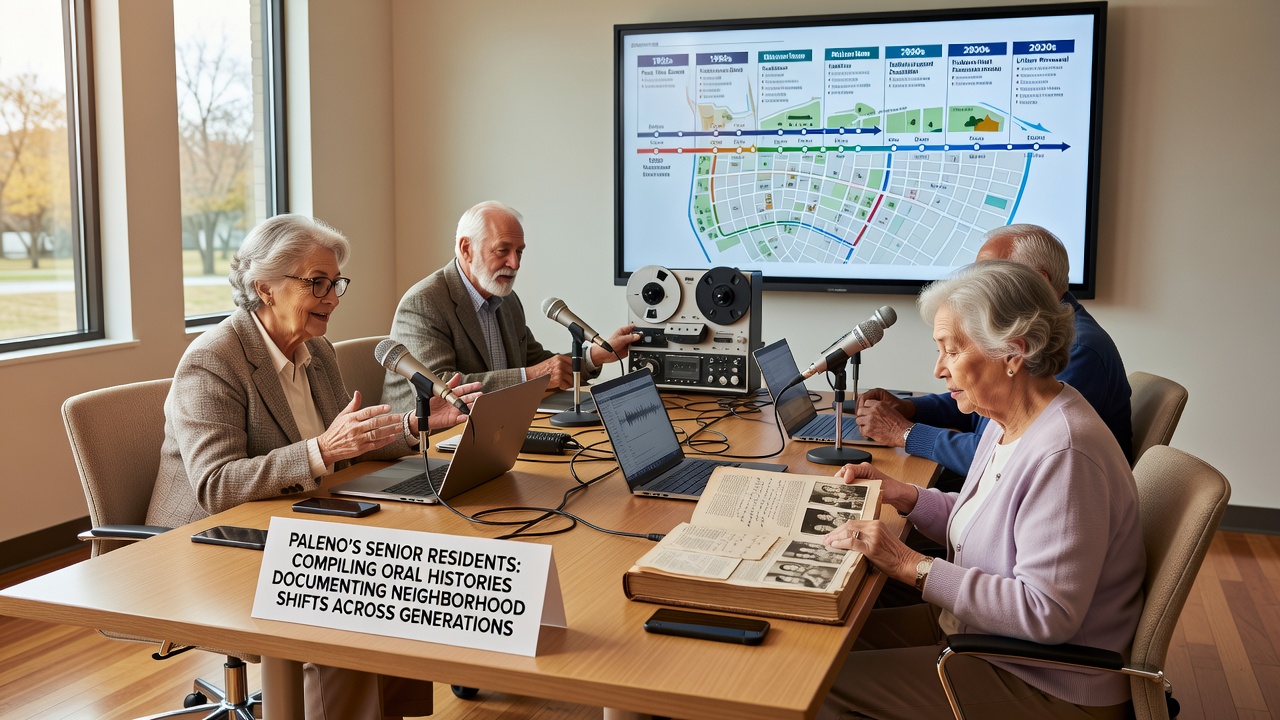
Paleno senior residents have organized a coordinated effort to record oral histories that capture neighborhood transformations spanning multiple generations, and the project continues to expand its scope into late 2026. Participants meet regularly in local community centers where they share accounts of housing changes, commercial shifts, and demographic patterns that have altered specific districts since the mid-twentieth century. Organizers have collected more than 180 recorded interviews by October 2026, each transcribed and cross-referenced with archival photographs and municipal records.
Project Origins and Structure
The initiative began when several longtime residents approached the Paleno historical society with proposals to preserve firsthand accounts before further details faded, and volunteers soon established weekly recording sessions supported by local librarians. Sessions follow a standardized protocol that includes open-ended questions about daily life in earlier decades alongside targeted inquiries about specific streets and buildings that no longer exist. Researchers from nearby universities have assisted with audio equipment calibration while maintaining distance from content decisions, and transcripts undergo review by multiple participants to verify accuracy before archiving.
Each interview averages ninety minutes, and teams divide topics into categories such as residential development, market evolution, and transportation infrastructure. Data from these sessions align with census figures released by Statistics Canada showing urban population redistribution patterns between 1960 and 2020, and similar cross-checks occur with municipal planning documents from Paleno city hall. Participants often reference family businesses that relocated or closed, providing context for maps that illustrate former storefront locations now occupied by newer enterprises.
Documented Neighborhood Changes
Stories compiled so far describe how certain blocks transitioned from predominantly single-family homes to mixed-use structures during the 1970s and 1980s, and residents detail the arrival of new community groups that altered local commerce and social routines. One district saw its central market relocate three times between 1965 and 1995, according to multiple accounts that match permit records filed with city planning offices. Interviewees recount specific addresses where factories operated until the early 1990s before sites converted to residential use, and they describe changes in public transit routes that affected daily commutes for several generations.
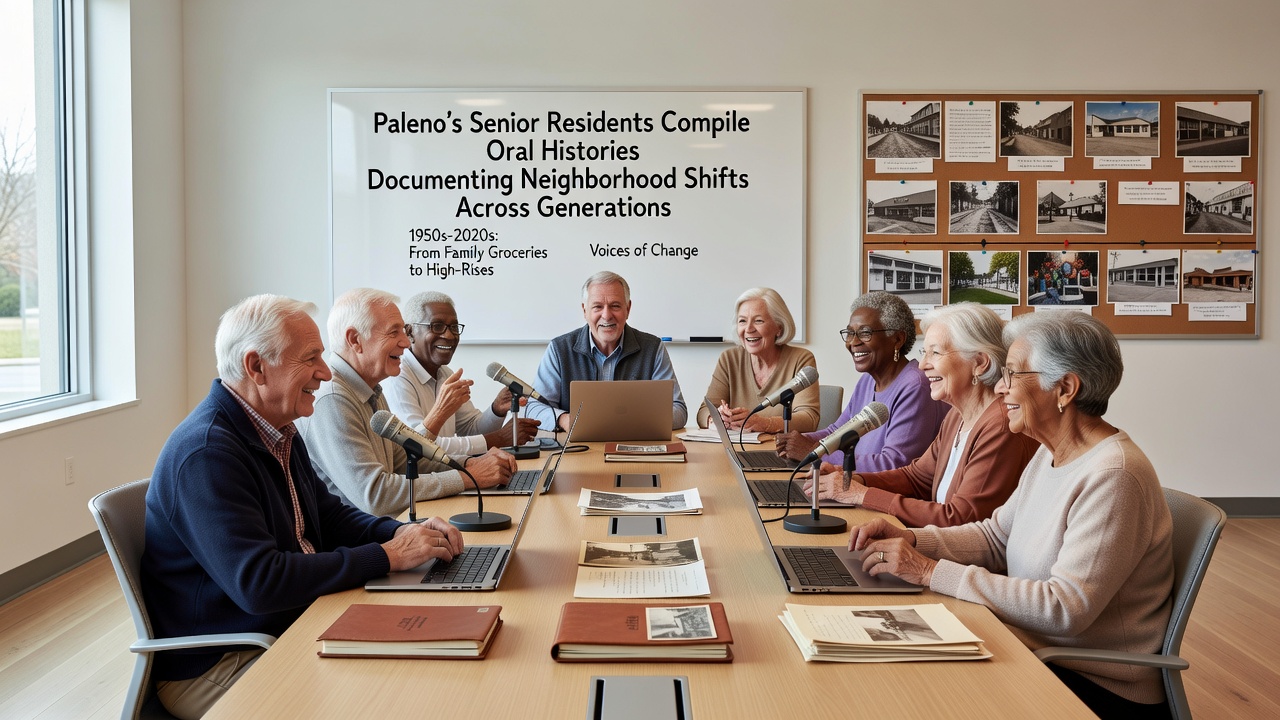
Additional narratives cover the introduction of high-rise apartments in the 2000s and the resulting shifts in green space availability, while earlier recollections reference agricultural plots that existed on city outskirts before suburban expansion. These accounts receive verification through side-by-side comparison with aerial imagery archived by regional land registries, and discrepancies trigger follow-up interviews to clarify timelines. The project maintains a public database accessible through the historical society website, where users can search entries by decade or neighborhood name.
Community Involvement and Archiving Methods
More than sixty volunteers aged sixty-five and older participate as both narrators and interviewers, and training workshops held in September 2026 covered basic recording techniques along with ethical guidelines for sensitive family details. Younger family members sometimes assist with digital file management, yet the core storytelling remains the responsibility of senior participants. The resulting collection gets stored in climate-controlled facilities at the Paleno public library, and duplicate digital copies reside on servers maintained by a regional university library consortium.
Cross-referencing continues with external data sets, including reports from the Australian Bureau of Statistics on comparable urban migration trends, which helps place Paleno patterns within broader international contexts without altering local interpretations. Organizers schedule quarterly public presentations where excerpts play for audiences, and feedback sessions allow residents to suggest additional topics for future recordings. As of October 2026, the archive includes materials covering twelve distinct neighborhoods, with plans to extend coverage to adjacent districts by early 2027.
Conclusion
The oral history compilation in Paleno demonstrates a systematic approach to preserving generational knowledge about neighborhood evolution through structured interviews and archival integration. Continued participation ensures the record expands while maintaining accuracy through verification against official documents and multiple accounts. The project provides a factual resource for researchers and residents seeking details on how specific areas have changed over decades.