Noah Schmid · 23 September 2026
Paleno's Tech-Savvy Farmers Forge Digital Networks to Counter Policy-Driven Crop Shifts
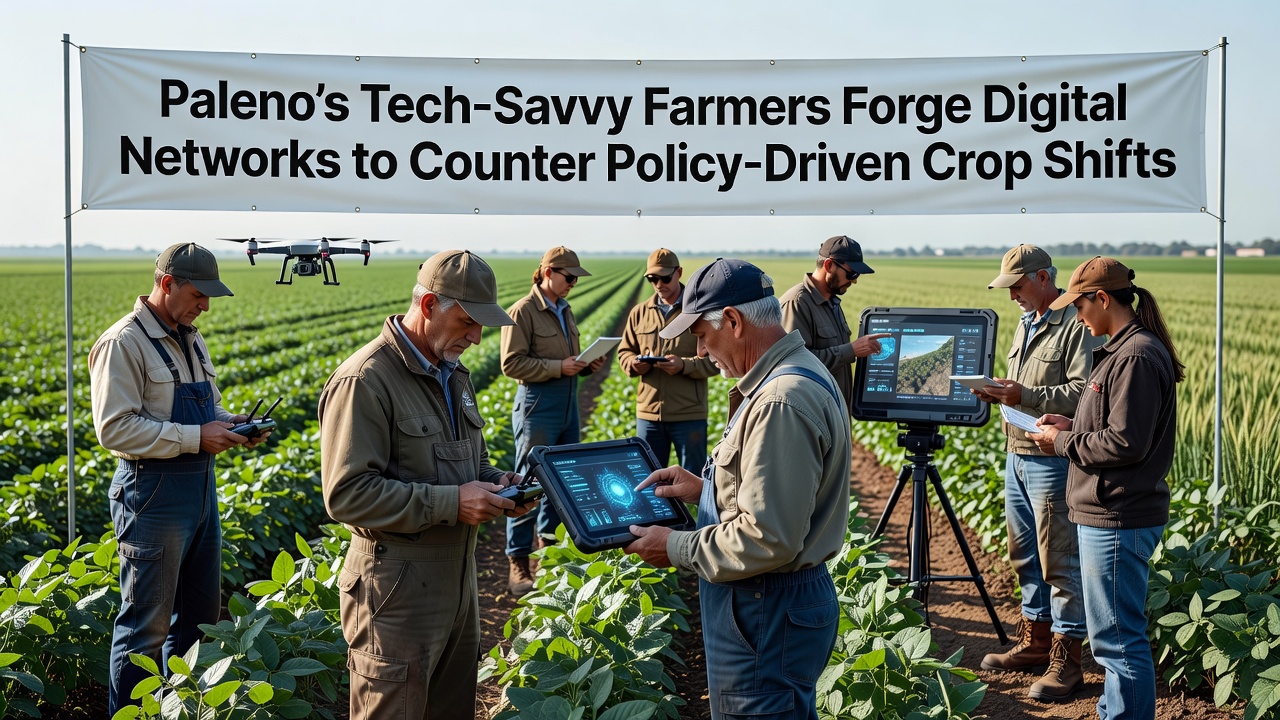
Paleno farmers have responded to recent agricultural policy adjustments by building interconnected digital platforms that share real-time soil data, market forecasts, and seed variety recommendations. These networks emerged after regional regulations in 2025 restricted certain water-intensive crops and promoted drought-resistant alternatives, prompting coordinated shifts across hundreds of local holdings. Researchers at the University of Bologna documented how early adopters integrated IoT sensors with mobile applications to track moisture levels and predict yield outcomes before committing to new planting schedules.
Policy Changes and Initial Crop Adjustments
European Union directives on sustainable water use took effect in late 2025 and required reductions in irrigation quotas for traditional rice and tomato fields in northern Italy. Paleno producers faced immediate pressure to replace portions of their acreage with sorghum and millet varieties that require less water yet maintain comparable market value. Data from the European Commission's Joint Research Centre shows that such transitions reduced average water consumption by 22 percent across similar Mediterranean districts during the first compliance year. Farmers in Paleno organized online forums to exchange cultivar performance results and coordinate bulk seed purchases, which lowered individual costs while accelerating adaptation timelines.
Digital Tools Driving Network Formation
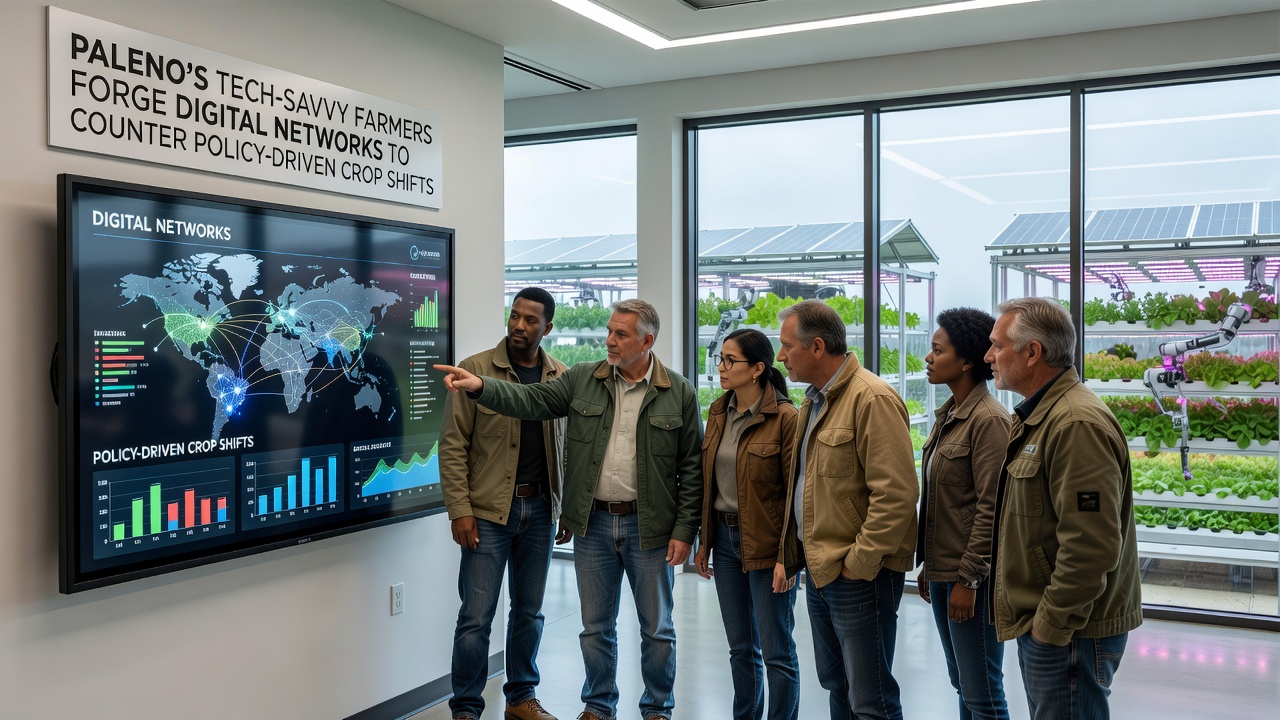
Local cooperatives partnered with software developers to create a centralized dashboard that aggregates satellite imagery, weather station readings, and regional price feeds. Participants upload daily field observations through smartphone interfaces, allowing the system to generate alerts when neighboring plots show signs of pest pressure or nutrient deficiency. One cooperative reported that members who joined the network in early 2026 achieved 15 percent higher survival rates for newly introduced sorghum strains compared with isolated operators. The platform also connects users directly to certified agronomists who review uploaded data sets and suggest precise fertilizer ratios tailored to each micro-climate.
By September 2026 the network had expanded to include over 340 active accounts representing roughly 60 percent of Paleno's cultivated land. Participants credit the shared database with identifying a previously underused millet hybrid that performed well in alkaline soils common to the area. Regular virtual meetings allow growers to discuss supply chain logistics, including coordinated transport schedules that reduce fuel expenses and spoilage losses. Industry reports from the Food and Agriculture Organization highlight similar collaborative models emerging in Australia and Canada, where digital farmer groups have shortened adaptation periods to policy shifts by several growing seasons.
Case Examples of Successful Adaptation
One mid-sized operation near the Paleno river switched 40 hectares from tomatoes to sorghum after the network flagged an impending water quota cut. The farm integrated drone-based multispectral scans with the cooperative platform and adjusted irrigation timing accordingly, resulting in stable output levels during the summer harvest window. Another producer used the forum to locate a buyer seeking millet for export contracts, securing advance pricing agreements that protected revenue before planting began. Observers note that these examples illustrate how pooled information reduces individual risk when regulations force rapid crop changes.
Challenges and Ongoing Refinements
Initial rollout encountered connectivity gaps in remote parcels, leading developers to incorporate offline data caching that syncs once devices reach stronger signals. Privacy concerns prompted the addition of anonymized data layers so that individual farm metrics remain protected while aggregate trends stay visible. Training sessions conducted through the platform have reached more than 200 participants since spring 2026, covering topics from sensor calibration to interpreting yield prediction algorithms. Continued funding from regional development grants supports server maintenance and feature updates based on user feedback.
Broader Implications for Regional Agriculture
Similar digital networks have appeared in neighboring districts facing comparable regulatory pressures. The Paleno model demonstrates that structured data exchange can support compliance while preserving operational autonomy for individual growers. Figures released by the Italian Ministry of Agriculture indicate that districts with active farmer networks recorded faster uptake of recommended alternative crops than those relying solely on traditional extension services. These patterns suggest that technology-mediated collaboration offers a scalable approach to policy-driven transitions across diverse European farming landscapes.
Conclusion
Paleno's experience illustrates how targeted digital infrastructure enables farmers to navigate crop policy shifts through collective intelligence rather than isolated trial and error. Continued expansion of these networks depends on reliable connectivity, ongoing training, and sustained policy support for open data standards. As additional regions adopt comparable systems, the accumulated datasets may yield broader insights into resilient cropping strategies under evolving regulatory frameworks.